Berlin Germany
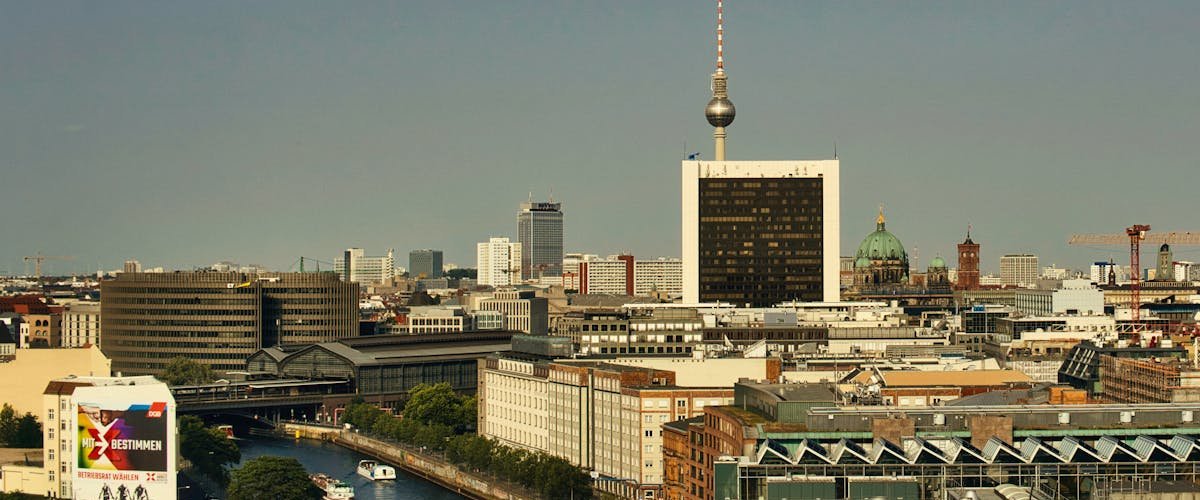
Berlin scores 8.6/10. 92 Mbps internet, 2,100 EUR/month, 12 EUR coworking day passes, and Europe's largest freelance community.
 German € euro (EUR)
UTC+01:00 Western Europe
German € euro (EUR)
UTC+01:00 Western Europe At a Glance
City Quick Facts
Monthly Budget
€2100 (Mid-range)
WiFi Speed
92 Mbps
Reliability
excellent
Best Months
Apr, May, Jun, Sep, Oct
Coworking Day Pass
N/A
Visa
Schengen Max Stay: 90 days
Air Quality
Good AQI 27
Currency Converter
Visa
Visa & Entry
Visa Types
Requirements
- Proof of sufficient funds
- Health insurance
- Client contracts (for freelancer visa)
Nearby Places
Coworking Spaces 17
- rent24
6 Oberwallstraße
- Unicorn Workspaces Gendarmenmarkt
24 Französische Straße
- Design Offices
26-30 Unter den Linden Berlin
- WeWork
76 Friedrichstraße
- Fora
40 Unter den Linden Berlin
- mindspace
68 Friedrichstraße Berlin
- Design Offices
3 Bertolt-Brecht-Platz Berlin
- WeWork
43 Rosenthaler Straße
- WeWork Hackescher Markt
3-5 Neue Schönhauser Straße Berlin
- Unicorn Workspaces Checkpoint Charlie
62/63 Markgrafenstraße Berlin
- Mindspace
- The Gate (TOR 201)
201 Torstraße Berlin
- betahaus
23 Rudi-Dutschke-Straße Berlin
- The Place
2 Charlottenstraße Berlin
- Hauptstadt Räume
- Design Offices
16 Leipziger Platz Berlin
- St. Oberholz
72 Rosenthaler Straße Berlin
Traveler Reviews
Based on 1583 reviews · Source: Aggregated
“Incredible tech scene and nightlife. Very international and English-friendly.”
“Bureaucracy is painful. Finding apartments is extremely difficult.”
Work Infrastructure
92 Mbps average internet speed with excellent reliability. Over 100 coworking spaces across the city, including Factory Berlin, betahaus, and St. Oberholz. Day passes start at 12 EUR, monthly memberships around 150 EUR. Berlin's startup scene is one of Europe's largest — most meetups and tech events run in English.
Cost of Living
2,100 EUR/month total budget. Rent around 900 EUR for a 1-bedroom apartment. A meal out costs roughly 8 EUR, coffee about 3 EUR. Cheaper than London, Paris, and Amsterdam, but rents have been rising steadily since 2020. The Mietendeckel (rent cap) was struck down, so expect landlord-friendly pricing in new leases.
Neighborhoods for Remote Workers
Kreuzberg: dense with cafes and coworking spaces, walkable, international crowd. Neukölln: cheapest central rents, strong nightlife, gentrifying fast. Prenzlauer Berg: quieter, family-friendly streets, good cafes. Friedrichshain: startup crowd, younger demographic, bars along the Spree. Mitte: central access, tourist-heavy but well-connected by U-Bahn and S-Bahn.
Visa & Legal
EU/Schengen zone — 90 days on a tourist visa. Germany has no dedicated digital nomad visa, but offers a freelance visa (Freiberufler) for non-EU citizens. Requirements: proof of income, client contracts, and German health insurance. Processing takes 4-8 weeks at the local Ausländerbehörde. EU citizens can work and reside without restrictions.
Climate & Best Time to Visit
Cold winters averaging -2°C in January, mild summers around 20°C. Best months for a workation: April through June and September through October — warm enough for outdoor cafes, fewer tourists than July-August. Winters are grey with short daylight hours (under 8h in December). Pack layers from October onwards.
Pros & Cons Summary
Pros: massive tech and startup scene, affordable for Western Europe at 2,100 EUR/month, English widely spoken, 100+ coworking spaces, 92 Mbps reliable internet. Cons: cold grey winters with limited daylight, German bureaucracy (especially the Ausländerbehörde), no dedicated nomad visa, rising rents and competitive apartment market.
Climate Overview
| Jan | Feb | Mar | Apr | May | Jun | Jul | Aug | Sep | Oct | Nov | Dec | |
|---|---|---|---|---|---|---|---|---|---|---|---|---|
| Temperature (°C) | -2 | 1 | 9 | 12 | 14 | 20 | 20 | 19 | 16 | 10 | 5 | 3 |
| Rainy days | 8 | 10 | 1 | 5 | 7 | 14 | 18 | 7 | 8 | 13 | 9 | 4 |
| Sun hours/day | 0.1 | 0.1 | 0.3 | 0.4 | 0.4 | 0.4 | 0.3 | 0.4 | 0.3 | 0.2 | 0.1 | 0.1 |
Pros & Cons
Pros
- ✓ Massive tech and startup scene
- ✓ Affordable for Western Europe at 2,100 EUR/month
- ✓ English widely spoken
- ✓ 100+ coworking spaces, day passes from 12 EUR
Cons
- ✗ Cold grey winters with limited daylight
- ✗ German bureaucracy, especially visa processes
- ✗ No dedicated digital nomad visa
- ✗ Rising rents and competitive apartment market
FAQ
Is Berlin good for remote work?
Berlin scores 8.6/10 for workations. 92 Mbps average internet, 100+ coworking spaces from 12 EUR/day, and most of the tech scene operates in English. The main drawbacks are cold winters and bureaucratic visa processes for non-EU citizens.
What visa do I need to work remotely in Berlin?
EU citizens need no visa. Non-EU citizens get 90 days on a Schengen tourist visa. For longer stays, apply for a German freelance visa (Freiberufler) — you need proof of income, client contracts, and health insurance. There is no dedicated digital nomad visa.
Which Berlin neighborhoods are best for remote workers?
Kreuzberg for cafes and coworking density. Neukölln for the cheapest central rents. Prenzlauer Berg for quiet, family-friendly streets. Friedrichshain for the startup crowd. All are well-connected by U-Bahn and S-Bahn.
When is the best time for a workation in Berlin?
April through June and September through October. Average temperatures 12-20°C, long daylight hours, and fewer tourists than peak summer. Avoid November through February — grey skies, -2°C averages, and under 4 hours of sunshine per day.
How much does a month in Berlin cost?
About 2,100 EUR/month. Rent ~900 EUR for a 1-bedroom, meals out ~8 EUR, coffee ~3 EUR, coworking ~150 EUR/month or 12 EUR/day. Cheaper than London or Paris but rising year over year.
All information without guarantee. Data is sourced automatically from third parties.
Parts of this content were created with AI assistance and editorially reviewed.